Learning Outcome 5
Stakeholder Communication & Personal Leadership
Stakeholder Communication Strategy and Feedback Collection
Owen is a young indie pop artist. He likely values emotion, creativity, and personal connection. Using a friendly and relaxed tone helps match his style. It makes him feel more comfortable and understood.
Using phrases such as “you can tell me if you don’t like something” shows that im open to feedback. This helps Owen feel safe to speak honestly. It creates a space where collaboration feels easy and respectful. That leads to a better final result.
Even though the message is casual, it still gets the main points across. Showing the work, giving it purpose, and offering to improve it. That’s important when working with creative people like Owen.
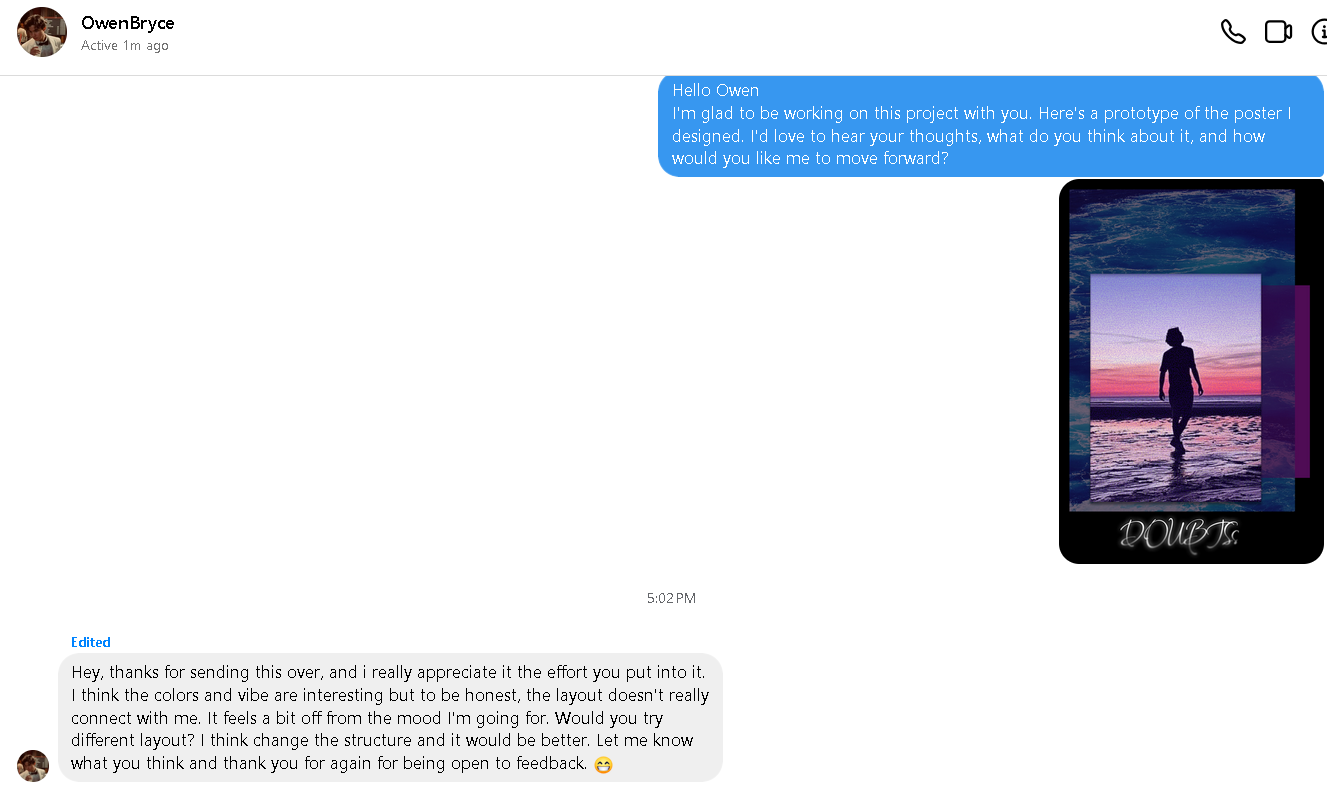
Asking for Feedback of prototype
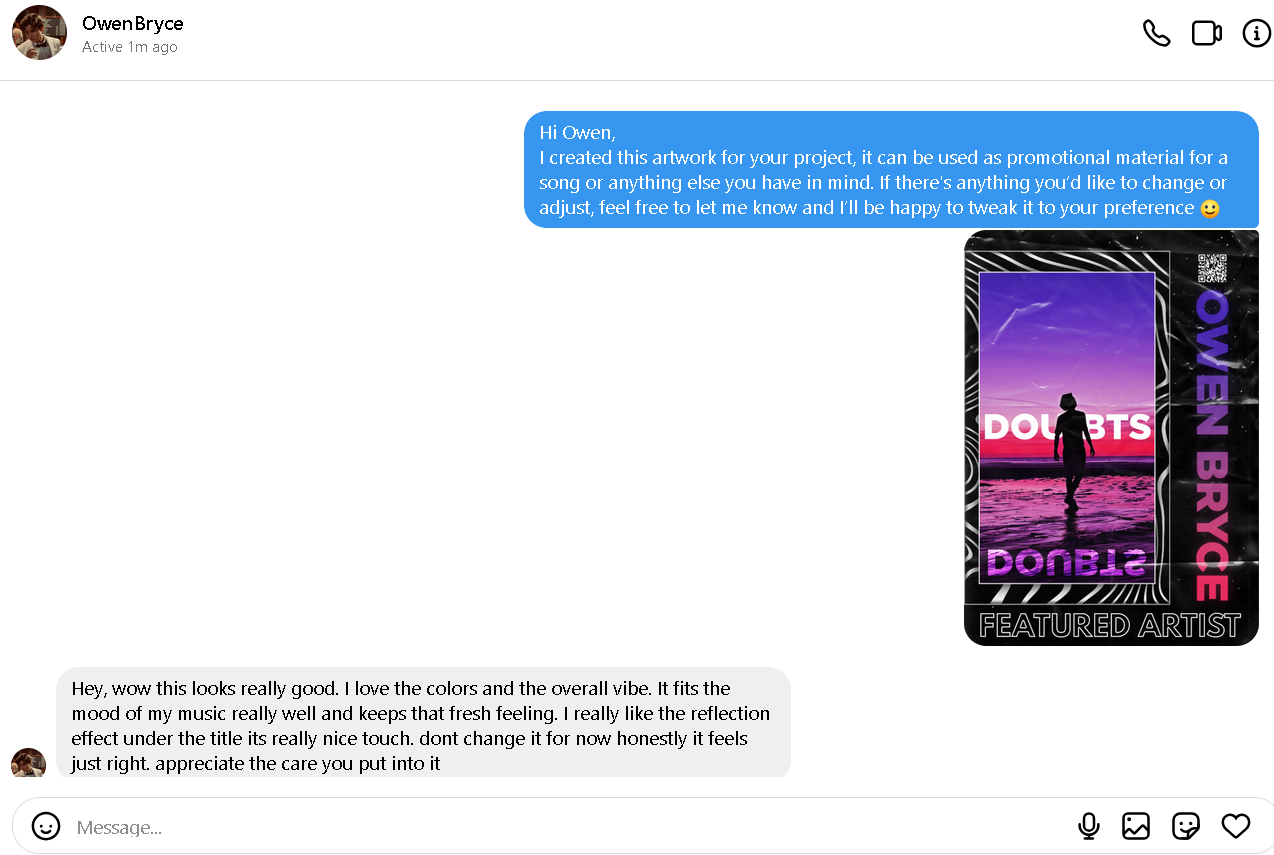
Applying Owen's Feedback
Feedback Implementation
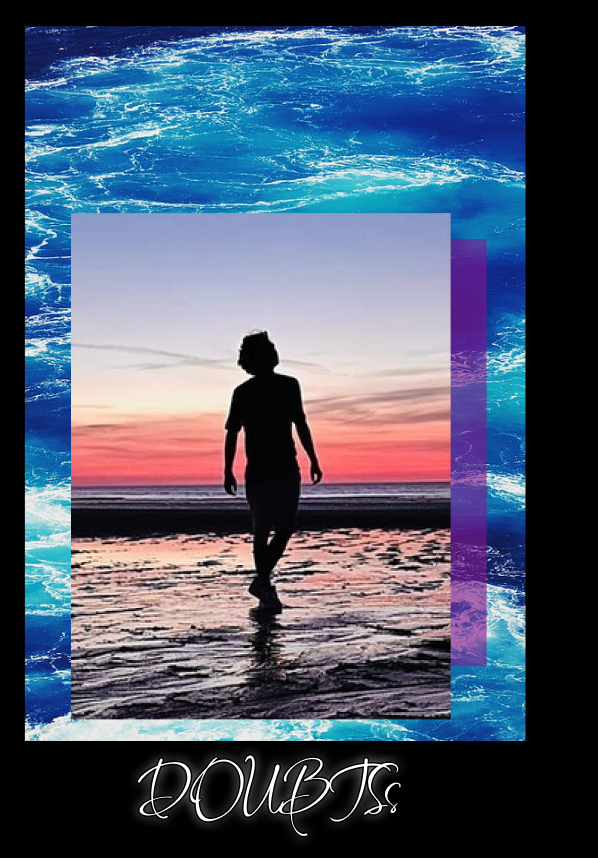
Initial design before feedback
This is the first iteration of the design.
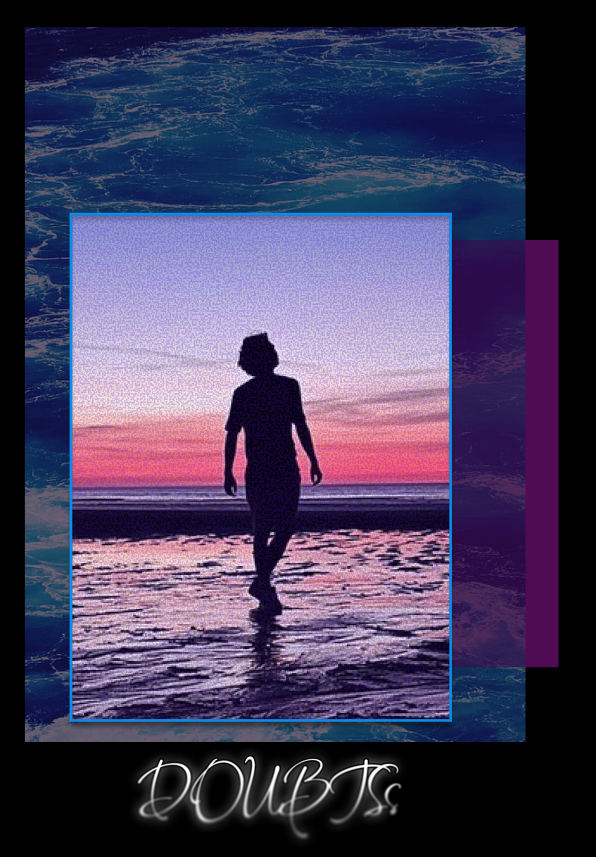
Iteration 2: Design Before Feedback
This is the second iteration of the design.
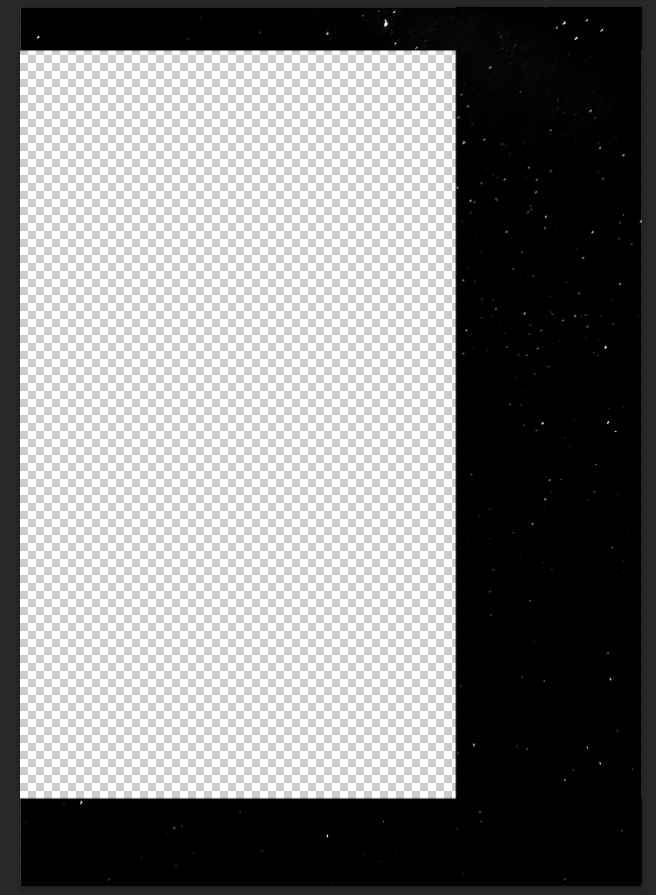
Step 1: Creating the Background
I started by setting up the poster’s background using a high-quality PNG of a night sky.
The dark, starry backdrop provided a moody and atmospheric foundation for the design.
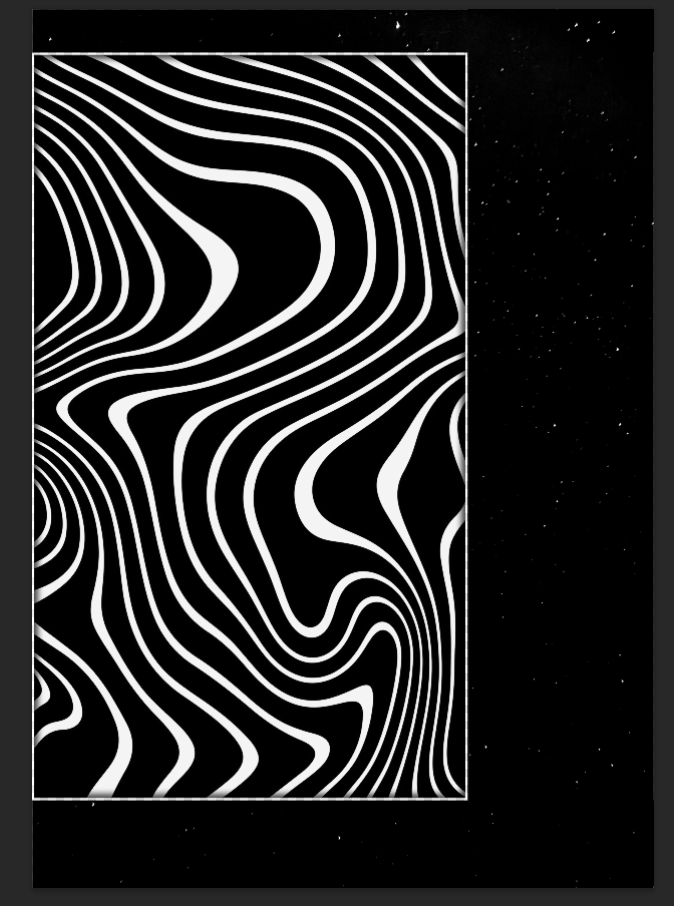
Step 2: Adding a Background Pattern
To enhance the visual depth, I layered a decorative pattern over the night sky—similar to the artwork style often seen in PewDiePie’s designs.
I converted the pattern to black and white for better contrast, then added a subtle border and an inner shadow to give it a slightly raised, textured effect.
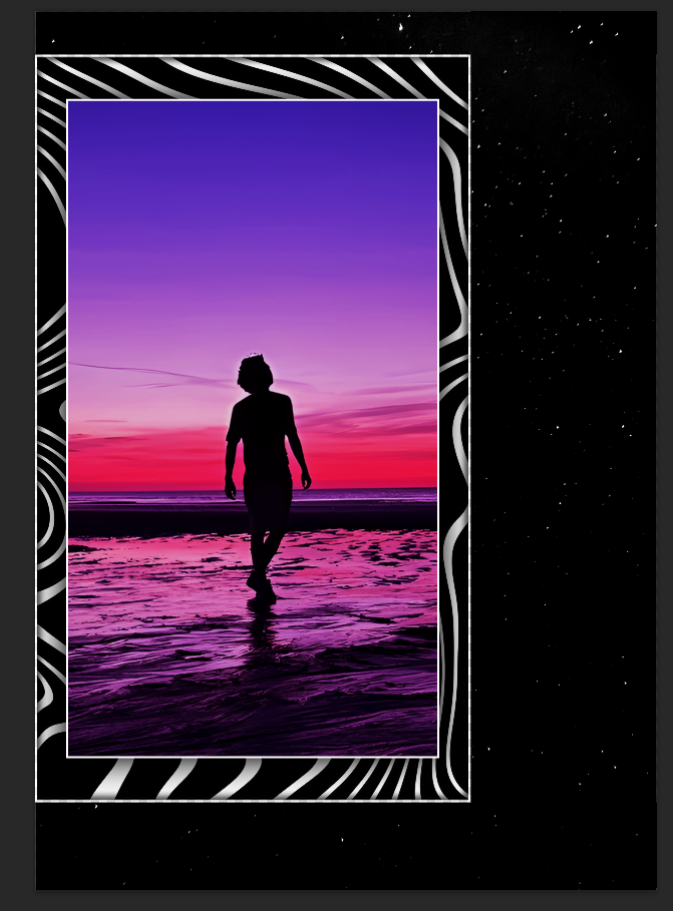
Step 3: Incorporating Owen’s Image
Next, I placed Owen’s image onto the poster. I applied color correction to ensure it matched the overall tone, then framed it with a clean border.
To make it stand out, I added a soft drop shadow beneath the image, creating a sense of depth.
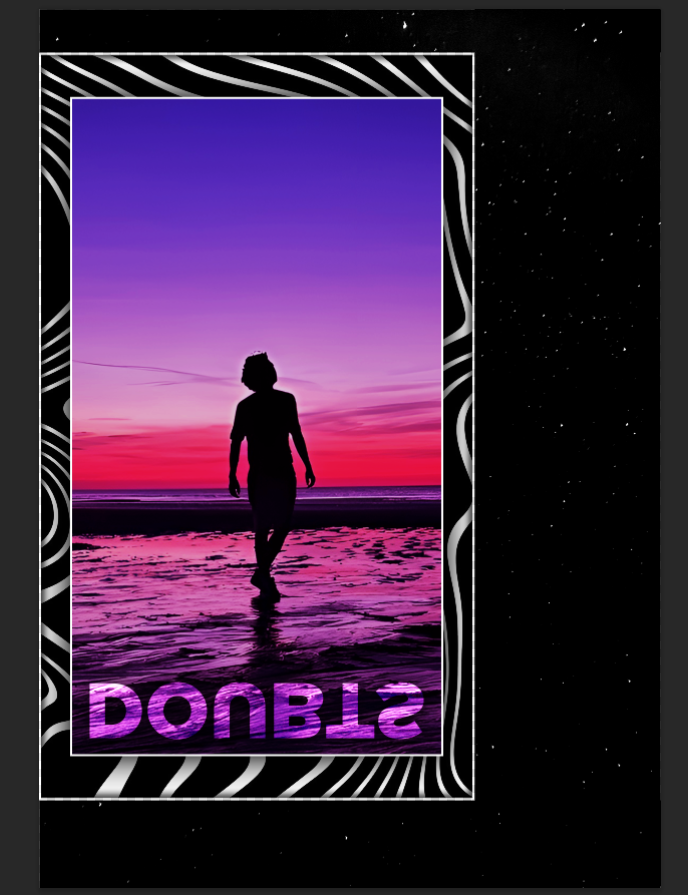
Step 4: Adding Sample Text (Album/Song Name)
I inserted placeholder text for the album or song name, positioning it prominently. To ensure readability against the background, I adjusted the brightness and contrast of the underlying elements.
Finally, I applied a shadow effect to the text to make it pop.
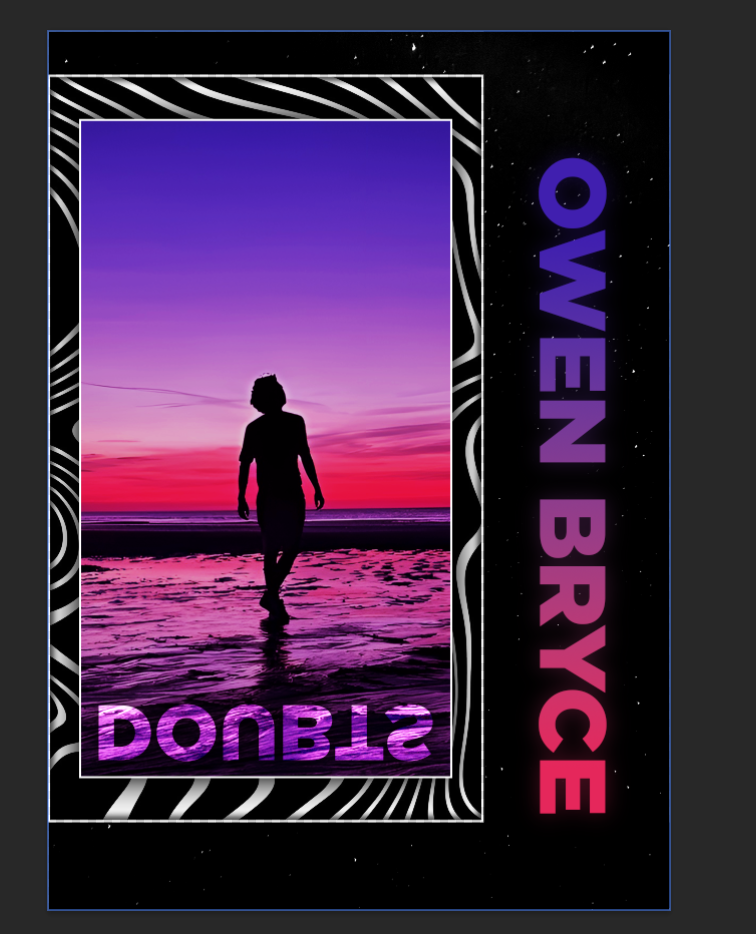
Step 5: Incorporating the Name Text
For the main name text, I designed a gradient that complemented the poster’s color scheme and applied it over the letters.
To create a glowing effect, I duplicated the text layer, applied a Gaussian blur, and placed it beneath the original text for a soft, luminous outline.
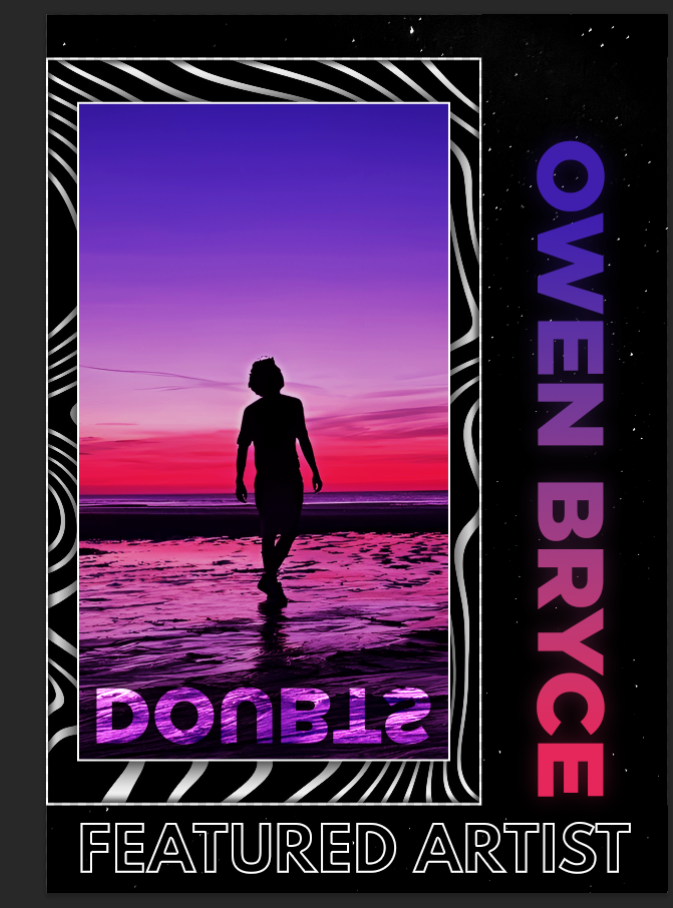
Step 6: Adding Outlined Text
I included additional text with a bold, clean look—black letters with a crisp white stroke.
This high-contrast treatment ensured legibility while maintaining a sleek aesthetic.
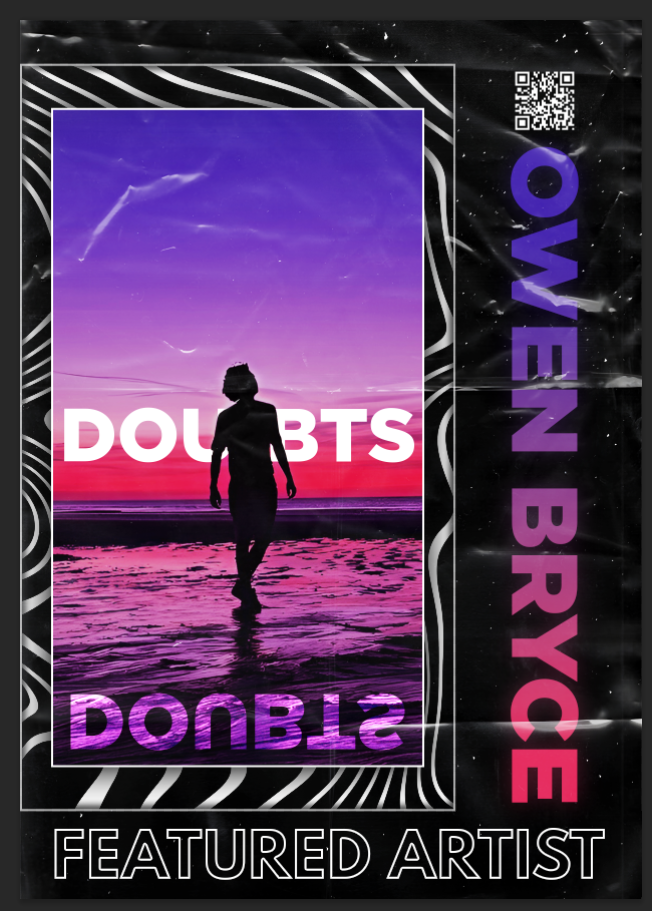
Step 7: Final Decorative Touches
To fill empty space and add functionality, I placed a QR code with a drop shadow to ensure visibility.
Lastly, I overlaid a subtle texture to give the poster a slightly worn, vintage feel, enhancing its visual appeal.

Steps Explained
Here's a brief breakdown of each individual step.
Core Values & Professional Development
Over time, I’ve learned that strong creative work doesn’t just come from skill—it also comes from having clear values. Some of mine include openness, adaptability, empathy, and quality.
Openness helps me stay flexible with ideas and willing to change direction when needed. I believe in listening carefully to others, especially when I’m working with someone who has a personal connection to the work—like Owen and his music.
Adaptability has been key in handling feedback. When Owen told me the first draft didn’t fit the mood he wanted, I didn’t see it as a setback. Instead, I saw it as a chance to grow the design in a more meaningful direction.
Empathy reminds me to see things from the other person’s perspective. Designing for someone else means thinking about how they’ll feel, how they’ll connect with the piece—not just how it looks.
Quality keeps me aiming for a professional finish, even when things are casual or fast-paced.
My professional development has followed these values. At first, I focused mostly on improving technical skills—Photoshop, Figma, After Effects—but recently I’ve also been working on my communication, project planning, and collaboration. My short-term goal is to become more confident when leading a project. In the long run, I want to combine creative direction with user-centered design to build things that feel both emotional and functional.
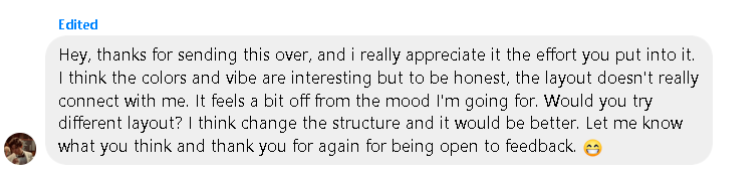
Owen's suggestions
Leadership Approach
My leadership style is based on clarity, support, and initiative. I don’t believe leadership always means being the loudest voice. It often means helping the group stay focused, making sure everyone is heard, and taking responsibility when something needs to move forward.
In this project, I took initiative from the start. I began by researching design styles that match indie pop music and built a concept that could support Owen’s artistic goals. When the first design didn’t connect with him, I didn’t wait to be told exactly what to do—I used his feedback to guide a full redesign.
Even though I was working solo on the visual side, I treated it like a collaboration. I set the tone for open discussion and kept checking in to make sure everything felt right. That approach helped create a smooth workflow and a stronger result.
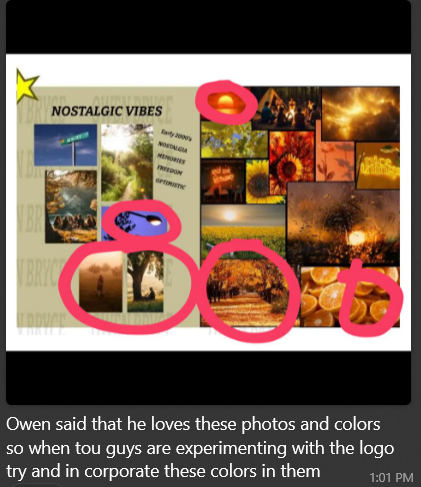
Notes taken from Owen's feedback
Communication Case Study
One challenge I faced during the project was when Owen gave feedback on my first poster prototype. He appreciated the colors but said the layout didn’t feel right for his music. At first, it was hard not to feel disappointed—I had spent time crafting something I thought worked. But I reminded myself that design is a conversation, not a one-way process.
My response was to thank him for being honest and to ask what direction he’d like to explore next. I used his feedback as a reference point, then went back to the drawing board. I changed the layout, adjusted the composition, and focused more on emotional tone.
When I sent him the new version, his reaction was completely different. He said it matched the mood of his music perfectly and highlighted small touches—like the reflection—that made a big impact. That moment showed how powerful it is to keep communication open, even when feedback isn’t what you expect.
This experience strengthened my belief that creative communication works best when it’s relaxed, respectful, and solution-focused.
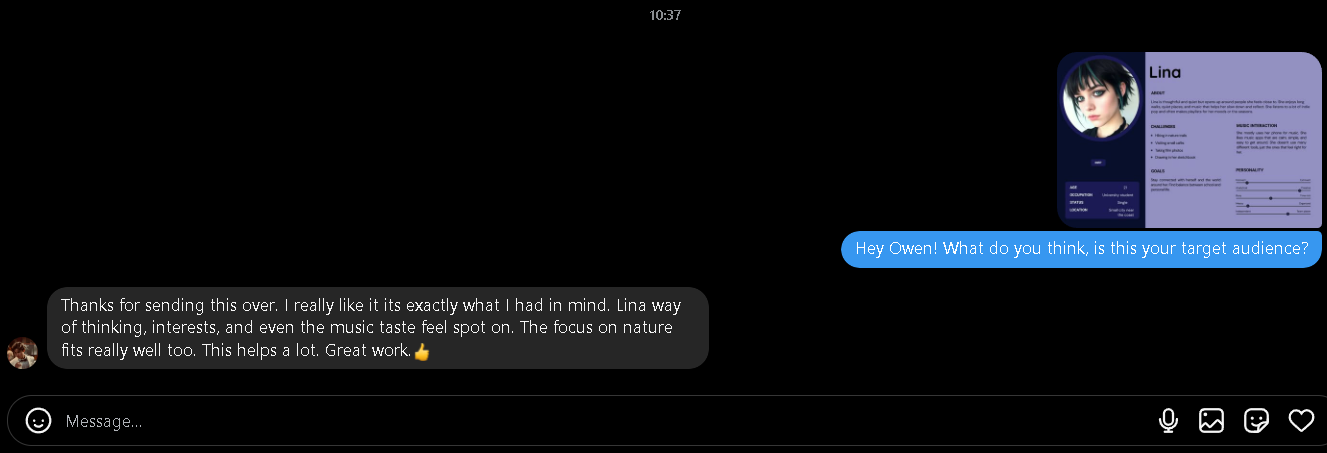
Owen's feedback on a persona
Introduction
In this section, I explore how my design process centers around real users and real feedback. My work combines visual creativity with personal storytelling—especially in interactive media. I pay close attention to both style and emotion. I stay updated with current tools like Figma, Photoshop, and After Effects, but I never let the tools lead the project. Instead, I focus on how people will connect with the work.
For me, design is not just about making something look good. It’s about how it feels, how it functions, and how clearly it communicates. Every part of my process—from early research to final feedback—is built with people in mind.
User-Centered Design Process
User Research:
I didn’t use formal interviews, but I researched how indie artists like Owen express themselves through visuals. I looked at their social media, cover art, and promotional graphics. This helped me understand what visual tone might work best. I also created a simple user persona for Owen—someone who values mood, personality, and emotional storytelling.
Wireframes and Prototypes:
Using Figma, I made rough layout sketches before starting the full artwork. My first idea looked clean but didn’t connect with Owen. After his feedback, I made a completely new layout that had a stronger emotional presence. This shift was shaped by his feedback, and it led to a more authentic design.
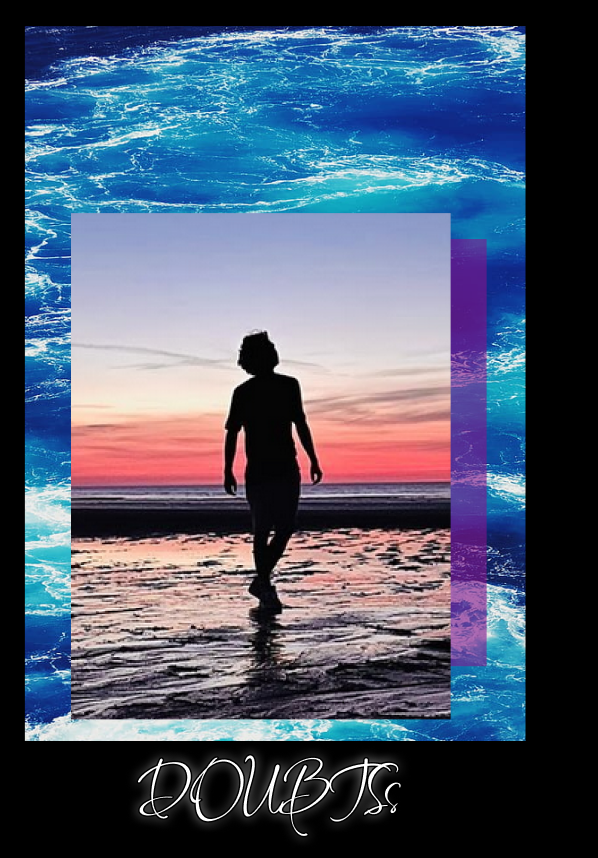
Early prototype
User Testing:
The first round of feedback helped guide the entire direction of the final piece. Once I sent the second version, Owen immediately connected with it. He said it felt just right and didn’t ask for any changes. The design process shown in LO3 and LO5 documents these steps clearly with visual examples.
Interactive Features Showcase
To go beyond static artwork, I created a short animated GIF using After Effects. It shows how the layers come together—background, title, reflection, and effects. This animation helped present the design in a more dynamic way.
I also used visual effects like glow, soft blur, and text motion to give it a polished, cinematic feel. Even though the interaction is simple, it added an extra layer of interest. The technology was kept minimal and efficient, focused on enhancing—not distracting from—the core design.
Stakeholder Communication
I communicated with Owen through messages, using a calm and friendly tone. I always made space for feedback and let him know he could be fully honest. This created trust and made the creative process smoother.
His input helped shape the entire project. His feedback on the first draft changed the layout. His response to the final design confirmed I was on the right track. That two-way communication played a big part in the project’s success.
Screenshots of these exchanges are shown throughout this page as proof of the process and communication flow.
Case Study - Artwork for Owen ("Doubts" Poster)
Problem Statement:
Owen needed promotional artwork that matched the emotion of his music. It had to be fresh, moody, and visually unique—without looking too generic or over-designed.
Solution Approach:
I started with visual research and Figma sketches. After presenting the first design, I received feedback that it didn’t fit. I took that feedback seriously and used it to build a new layout with stronger visual storytelling.
User Testing:
I shared both versions with Owen and paid close attention to his reactions. The second design hit the right mood. He called out specific things he liked, like the reflection under the title and the color vibe.
Outcome:
The final piece was approved with no changes. It worked both as a standalone artwork and as promotional content. The project showed how user feedback and strong communication can take a good idea and turn it into the right idea.
Learning Outcomes
Outcomes
These learning outcomes represent key skills and competencies developed throughout my web development education and professional experiences.
LO 1
Mastered front-end web development fundamentals including HTML5, CSS3, and JavaScript to create responsive and accessible user interfaces.
LO 2
Developed proficiency in modern frameworks like React.js to build dynamic, interactive web applications with efficient state management.
LO 3
Implemented backend solutions using Node.js and database management systems to create full-stack applications with secure data handling.
LO 4
Practiced user-centered design principles and created wireframes and prototypes that prioritize intuitive user experiences.